

Founder-Led Sales: How to Sell When You Hate Selling
A founder-led sales playbook for people who hate selling: build a pipeline, run discovery calls, and close your first customers - no sales experience needed.
You built something good, and now you have to sell it - and the thought makes your skin crawl. Here's the uncomfortable truth about founder-led sales: in the early days, nobody can do this job except you. The good news is that sales for founders isn't about becoming a slick closer. It's a learnable process, and this guide walks you through it step by step - from a blank spreadsheet to your first hire.
Why nobody sells your product better than you (for now)
If you're wondering how to sell as a founder with zero sales experience, start by accepting one thing: your inexperience matters less than your credibility. You know the problem, the product, and the trade-offs better than any rep ever will. When a founder says "we can't do that yet," buyers believe it - and trust you more for it.
A frequently cited First Round Capital survey found that around 72% of successful B2B startups had founders personally close the first $1M in revenue. Y Combinator's standing advice is the same: founders should do sales themselves for at least the first 10-20 customers. The consistent benchmark across the best founder-led sales guides is to close your first 30-50 customers yourself before you even think about delegating.
Why? Because early sales isn't really sales - it's product discovery with a credit card at the end. Every call teaches you which pain points make people reach for a budget and which just make them nod politely. Dock founder Alex Kracov has said his biggest early mistake was "trying to build for too many use cases" - it was doing sales conversations himself that forced the niche-down. Outsource those conversations too early and you outsource your product education.
One more reason to be the face of your own pipeline: B2B buyers are roughly 70% of the way through their evaluation before they ever talk to a salesperson. A founder who posts and speaks about the problem space meets buyers who are already warm.
Reframing founder-led sales: diagnosis, not persuasion
Most founders who "hate selling" actually hate a cartoon of selling - the pushy pitch, the fake urgency, the awkward close. Real B2B sales for founders looks nothing like that. Think of yourself as a doctor: you ask questions, understand the situation, and only prescribe if there's genuinely something wrong you can fix. If there isn't, you say so and leave. That's the whole reframe.
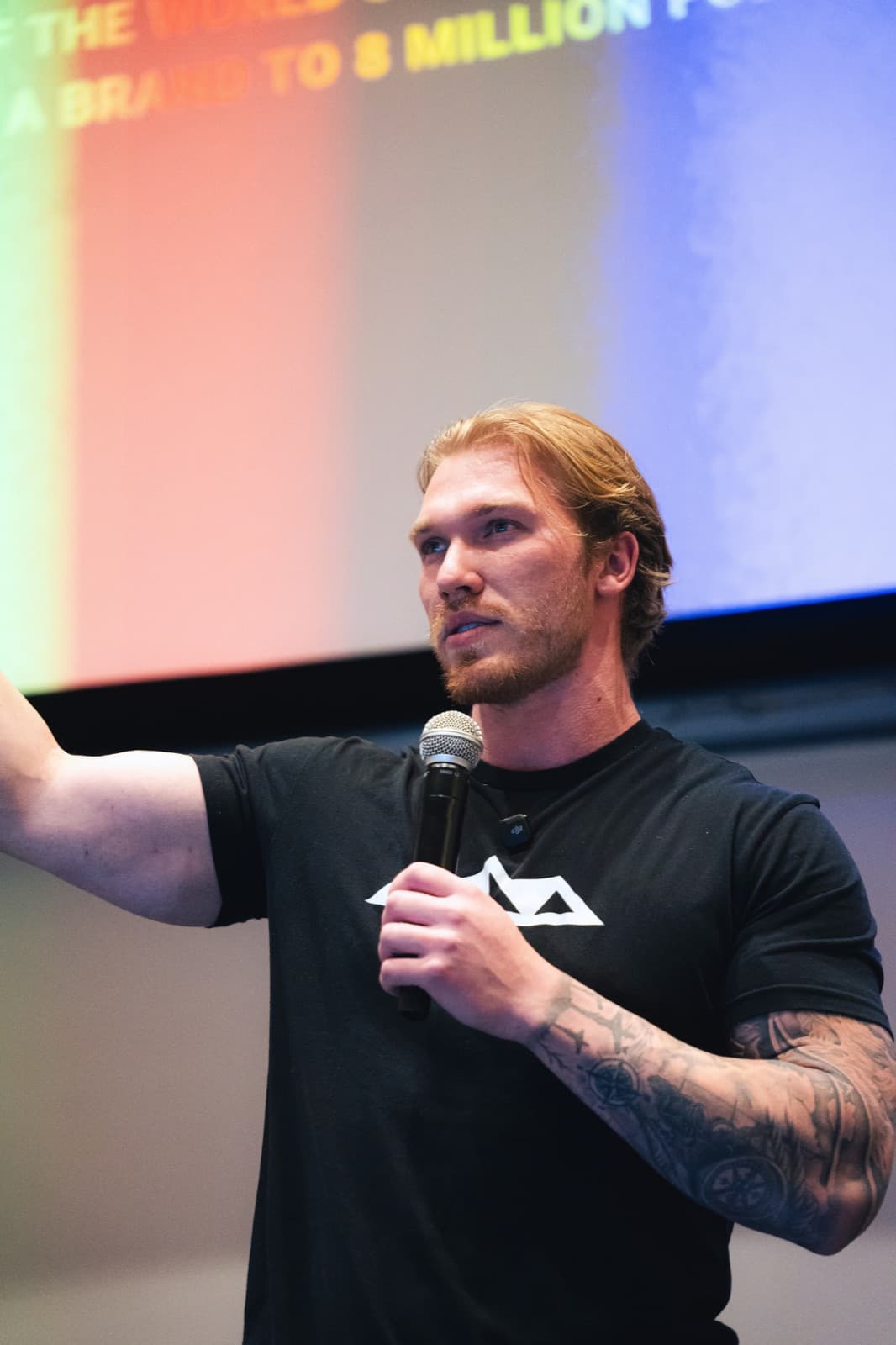
Chris Rigoudis, a direct-response copywriter and sales-performance agency founder who has spoken at Kelowna Founders Club, has built his entire practice around this idea. His philosophy is explicitly against "sleazy, salesy copy" and pushy sales - he champions ethical marketing and authentic selling, and his formula is simple: the right messaging, plus a compelling offer, plus a clear strategy for getting it in front of people. He's applied it with more than 100 clients since 2018, including NYT-bestselling authors. The lesson for Okanagan founders: persuasion isn't pressure. It's clarity about a real problem, said in the buyer's own words.
The other essential mental model is The Mom Test by Rob Fitzpatrick, used in curricula at Harvard and Shopify. Three rules:
- Talk about their life, not your idea. People lie politely about ideas; they can't lie about what they did last Tuesday.
- Ask about specifics in the past, not hypotheticals. "How did you handle this last quarter?" beats "Would you use this?"
- Talk less, listen more. The customer should be speaking about 80% of the time.
If you're an introvert, this reframe is your unfair advantage. How to do sales without experience? Ask good questions and shut up. Introverts are usually better at that than natural talkers.
Build a simple pipeline in a spreadsheet or free CRM
Only about 2% of deals close on first contact. Your pipeline exists to manage the other 98% - and a founder sales process without a pipeline is just a series of forgotten conversations.
Start embarrassingly simple. A spreadsheet handles up to roughly 50 active prospects. One row per deal, with these columns:
- Company and contact (name, role, email)
- Stage (Lead → Contacted → Call booked → Proposal sent → Won/Lost)
- Next action and next-action date - the two columns that matter most
- Deal value (estimated)
- Source (referral, KFC event, cold email, LinkedIn)
Every Monday, sort by next-action date and work the list. The moment you notice dropped follow-ups - that's your upgrade trigger to a free CRM.
| Option | Cost | Key limits | Best for |
|---|---|---|---|
| Spreadsheet | Free | Manual everything; breaks past ~50 prospects | Your first 90 days |
| HubSpot Free | Free | 2 users, 1,000 contacts, 1 pipeline, no automation, HubSpot branding on emails | Founders who want reminders and email logging |
| Zoho CRM / Freshsales (free tiers) | Free | Fewer caps than HubSpot's free plan, less polished | Founders bumping HubSpot's limits |
Don't overthink this choice. The tool that wins is the one you actually update after every call.
Outreach that gets replies: warm intros, communities, and cold email
Cold outreach for founders is real, but it's the last resort, not the first move. The conversion gap is enormous: warm intros convert to meetings at 15-25%, versus 1.5-2% for cold lists, and warm referrals close roughly 38% faster. Your order of operations:
- Existing network first. List everyone who knows and trusts you. Ask each for one specific intro: "Do you know anyone who [has this exact problem]?"
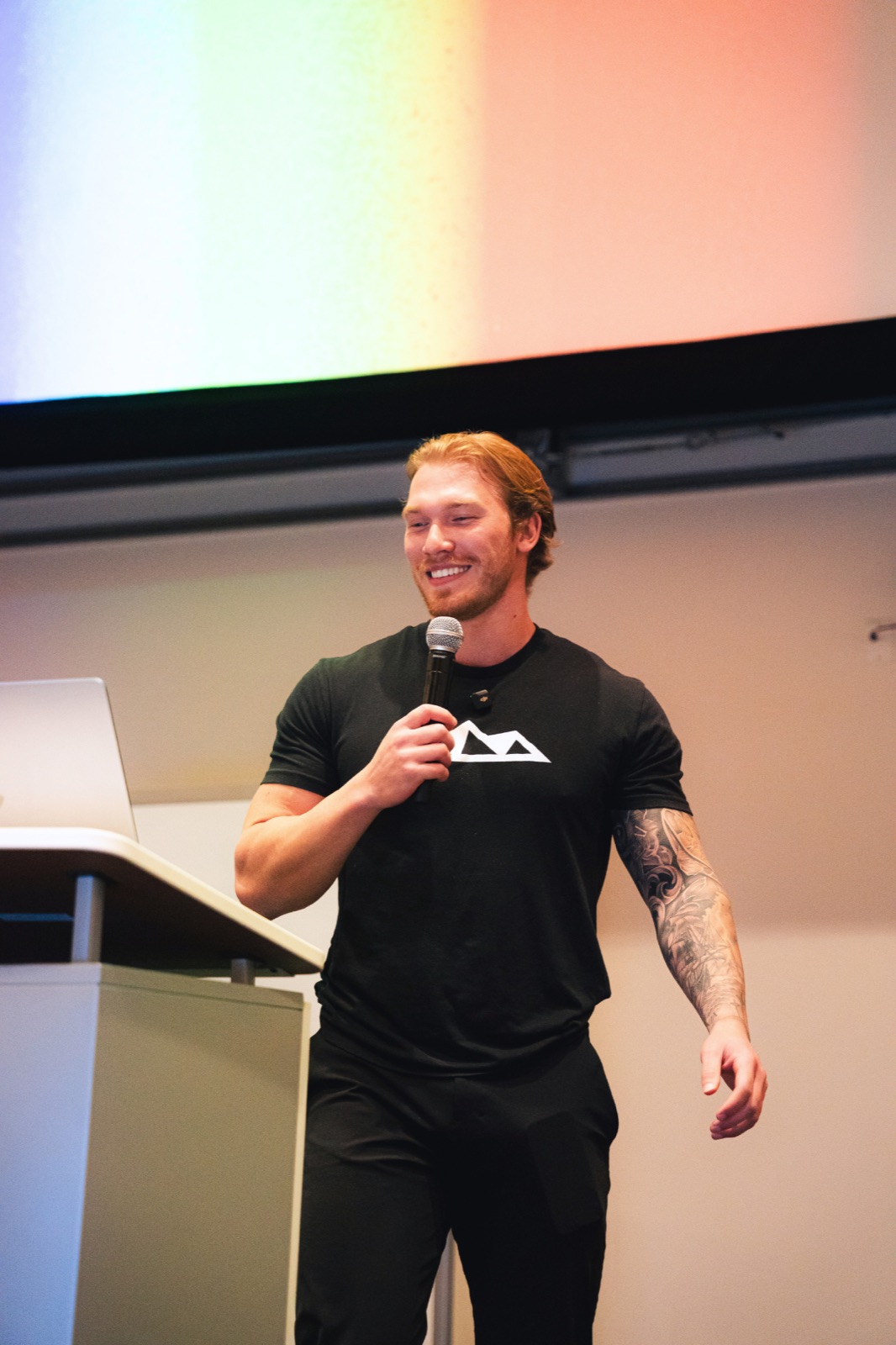
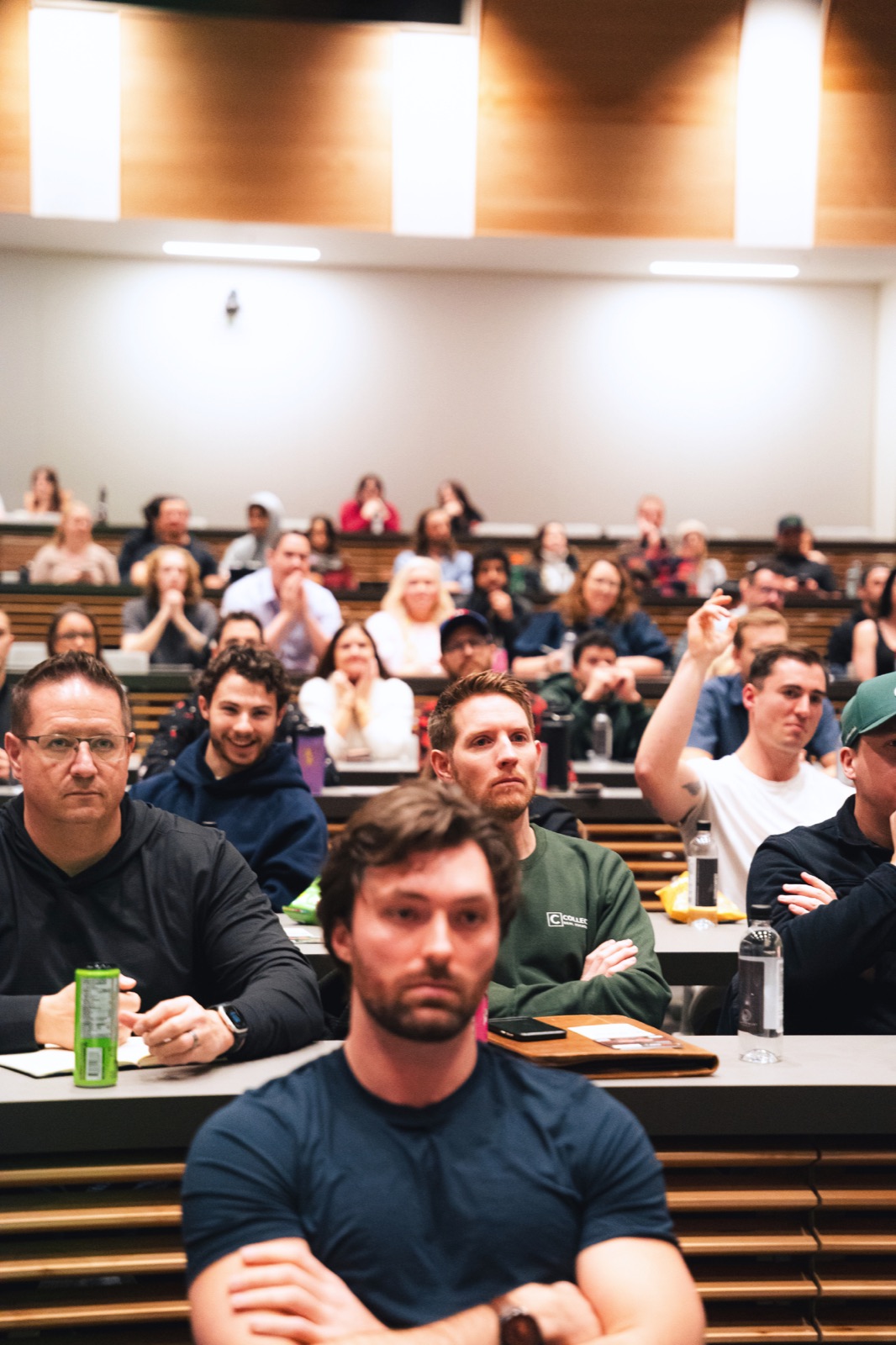
- Communities second. This is where Kelowna punches above its weight. There are 17,299 licensed businesses in the Central Okanagan and 787 tech companies across the region - small enough that reputation compounds and almost any B2B buyer is one or two warm hops away. Show up at KFC events, the Kelowna Chamber of Commerce's Sales Lead Network, or a BNI chapter. About 95% of professionals say face-to-face meetings are essential for lasting business relationships, and 40%+ of in-person B2B meetings convert to new customers. If networking feels awkward, our guide on how to network as an entrepreneur fixes that.
- Cold email third. Average reply rates sit at 3.43% in 2026, per Instantly's benchmark report; 5-15% is good, and signal-based personalization (a funding round, a hiring spree, a new leader) can hit 15-25%.
Cold email mechanics that actually move the numbers:
- Keep the first touch under 80 words. Emails of 50-125 words get about 2.4x the replies of 200+ word essays.
- One clear call to action - usually "worth a 20-minute call?"
- Plan a 4-7 email sequence: the first email captures 58% of replies, but follow-ups capture the other 42%.
- Send Tuesday-Wednesday, 9:30-11:30am in the recipient's time zone.
Running a discovery call: questions that do the selling
The discovery call is where founder-led sales is won or lost - and it's mostly listening. Top-performing reps ask 12-15 questions per call and let the buyer talk 65%+ of the time; bottom performers ask fewer than six and monologue about features.
Structure your discovery call questions with the classic SPIN flow:
- Situation: "Walk me through how you handle this today." "Who's involved?"
- Problem: "What's the most frustrating part of that?" "What have you already tried?"
- Implication: "What is this costing you in time, resources, or revenue?" "What happens if nothing changes next quarter?"
- Need-payoff: "If this were solved, what would that make possible for the team?"
Notice what's happening: the implication questions do the selling for you. When a Vernon manufacturer tells you that a broken process costs them $8K a month, you never have to "convince" them of anything - you just have to be the credible fix. End every call with a concrete next step booked on the calendar before you hang up. "I'll send some info" is where deals go to die.
Proposals, pricing, and closing without pressure
How to close deals as a founder without feeling gross: be fast, be short, be specific.
- Send the proposal within 24 hours. Proposals sent within a day of the conversation win up to 25% more, and answering follow-up questions within 4 hours correlates with a 35% higher close rate.
- Keep it under 5 pages. Short, customized proposals close at dramatically higher rates than long template decks - customized proposals win 50-65% of the time versus 15-25% for rigid templates.
- Include a pricing table with 2-3 options; pricing tables are associated with 54% higher conversion. Options turn "yes or no" into "which one."
- Know your benchmark. Median proposal-to-close is about 25%; top quartile is 35%+. If you're above 20% as a first-time seller, you're doing fine.
On pricing: when torn between two numbers, pick the higher one. You can always discount; you can't un-anchor a low price. Value-based pricing typically yields 20-30% more revenue than cost-plus maths. If naming a number still makes you sweat, read our full guide on how to price your product or service.
And the close itself? If discovery was honest, closing is just logistics: "Based on what you told me, option two solves the problem. Want to start on the 1st?" No pressure tactics required - just a clear question.
Follow-up: where 80% of deals are actually won
Widely cited industry figures hold that 80% of sales require five or more follow-ups - yet 44% of salespeople give up after one, and 92% quit before the fifth touch. The drop-off ladder is brutal: 44% quit after one attempt, another 22% after two, 14% after three, 12% after four. Which means the founder who politely persists is competing with almost nobody by touch five.
Two rules make follow-up painless:
- Never "just check in." Every touch adds value: a relevant case study, a useful article, a new idea from their industry, a note from a KFC speaker session that made you think of them.
- Schedule the next follow-up the moment you send the current one. That's what your next-action date column is for. Persistence is a calendar feature, not a personality trait.
Follow-up doesn't end at the signature, either. Your first customers are your cheapest source of the next ones - referrals, testimonials, case studies. Our guide to customer retention strategies for small business covers how to keep them.
When to move beyond founder-led sales and hire help
Every founder sales process has an expiry date. You're ready to hire your first salesperson when you have:
- 10-25 closed customers (30-50 is safer) and a 20%+ win rate
- A documented, repeatable process - your outreach templates, discovery questions, proposal format, and objection answers written down
- Clear capacity pain: you're losing deals because you can't respond within 24 hours, you're double-booked on demos, or signings have been flat for two months while inbound grows
That middle bullet is the one founders skip - and it's why roughly 68% fumble the transition. The system has to be ready, not just the revenue.
Practical notes for hiring in Canada in 2026: expect an SDR base of CA$50-80K (median on-target earnings around CA$85K, fully loaded closer to CA$100-114K/yr). B.C. founders can offset the ramp with the B.C. Employer Training Grant (80% of training costs, up to $10K per employee) and the WorkBC Wage Subsidy ($3,600-$12,000) - details at workbc.ca. Budget for a 3-6 month ramp before full productivity, so hire before you're drowning. If you can afford it, hire two reps rather than one - you get a benchmark instead of a coin flip. Look for someone comfortable with ambiguity who documents everything.
Even after the hire, don't vanish. The best founders stay close to sales forever - they just stop doing every call.
Key takeaways
- Do your own sales for the first 30-50 customers. It's product education you can't buy, and buyers trust founders more than reps.
- Reframe selling as diagnosis. Ask about past behaviour, not opinions; let the buyer talk 65-80% of the time.
- Run a pipeline from day one - spreadsheet first, free CRM when follow-ups start slipping. Only 2% of deals close on first contact.
- Work warm before cold. Warm intros convert at 15-25% versus 1.5-2% for cold lists; in a market the size of the Okanagan, everyone is two hops away.
- First cold email under 80 words, one CTA, 4-7 touch sequence.
- Send proposals within 24 hours, under 5 pages, with a pricing table. Median proposal-to-close is 25%.
- Follow up five-plus times with value each touch - 92% of sellers quit before the fifth attempt, so persistence alone is a competitive edge.
Frequently asked questions
How many customers should a founder close before hiring a salesperson?
At minimum 10-25 closed B2B customers with a 20%+ win rate - but 30-50 is the safer benchmark. More important than the count is a documented, repeatable process a new hire can actually run. Budget 3-6 months of ramp time before your first rep is fully productive.
How long should a cold email be?
Under 80 words for the first touch. Emails of 50-125 words earn roughly 2.4x the reply rate of emails over 200 words. One clear ask, no attachments, and plan a 4-7 email sequence since follow-ups capture 42% of total replies.
What questions should I ask on a discovery call?
Aim for 12-15 questions following the SPIN flow: Situation ("How do you handle this today?"), Problem ("What's most frustrating about it?"), Implication ("What's it costing you?"), Need-payoff ("What would solving it unlock?"). The buyer should be talking at least 65% of the call.
Can I sell my product before it's built?
Yes - selling before the product is built is one of the strongest forms of validation. Run Mom Test-style interviews about past behaviour, then ask for a real commitment: a deposit, a signed letter of intent, or a paid pilot. Pre-selling has been associated with meaningfully higher product success odds, and a polite "no" now is far cheaper than a launch flop later.
What's a good proposal-to-close rate?
The median is about 25%, with top-quartile sellers at 35%+ (based on a 939-company benchmark dataset). Improve yours by sending proposals within 24 hours, keeping them under five pages, customizing each one, and including a pricing table with options.
I'm an introvert - can I really do founder-led sales?
Yes, and you may be better at it than extroverts. Modern B2B selling rewards listening, preparation, and genuine one-on-one conversation - not charisma. Use a question framework, let the buyer do most of the talking, and treat every call as diagnosis rather than performance.
Where can I practise sales skills in Kelowna?
Start with free community events: Kelowna Founders Club sessions regularly feature sales and marketing speakers (including copywriter Chris Rigoudis), the Kelowna Chamber of Commerce runs a Sales Lead Network plus its "Beyond Handshakes" and Sales Success workshops in 2026, and BNI has weekly Kelowna chapters. Face-to-face still wins - over 40% of in-person B2B meetings convert to new customers.
Founder-led sales isn't a personality transplant - it's a process: warm outreach, honest discovery, fast proposals, patient follow-up. The fastest way to shortcut the learning curve is to be around people a step ahead of you. Join the Kelowna Founders Club free and start building the network that fills your pipeline.
Want the next play first?
Join free and get every guide, speaker insight, and event invite before anyone else. Built by founders in the Okanagan.
Join the club freeSee upcoming events