

How to Get Funding for a Startup in Canada: Every Option
How to get funding for a startup in Canada in 2026: loans, grants, angels, and VC compared by stage - with the exact BC and Okanagan path for Kelowna founders.
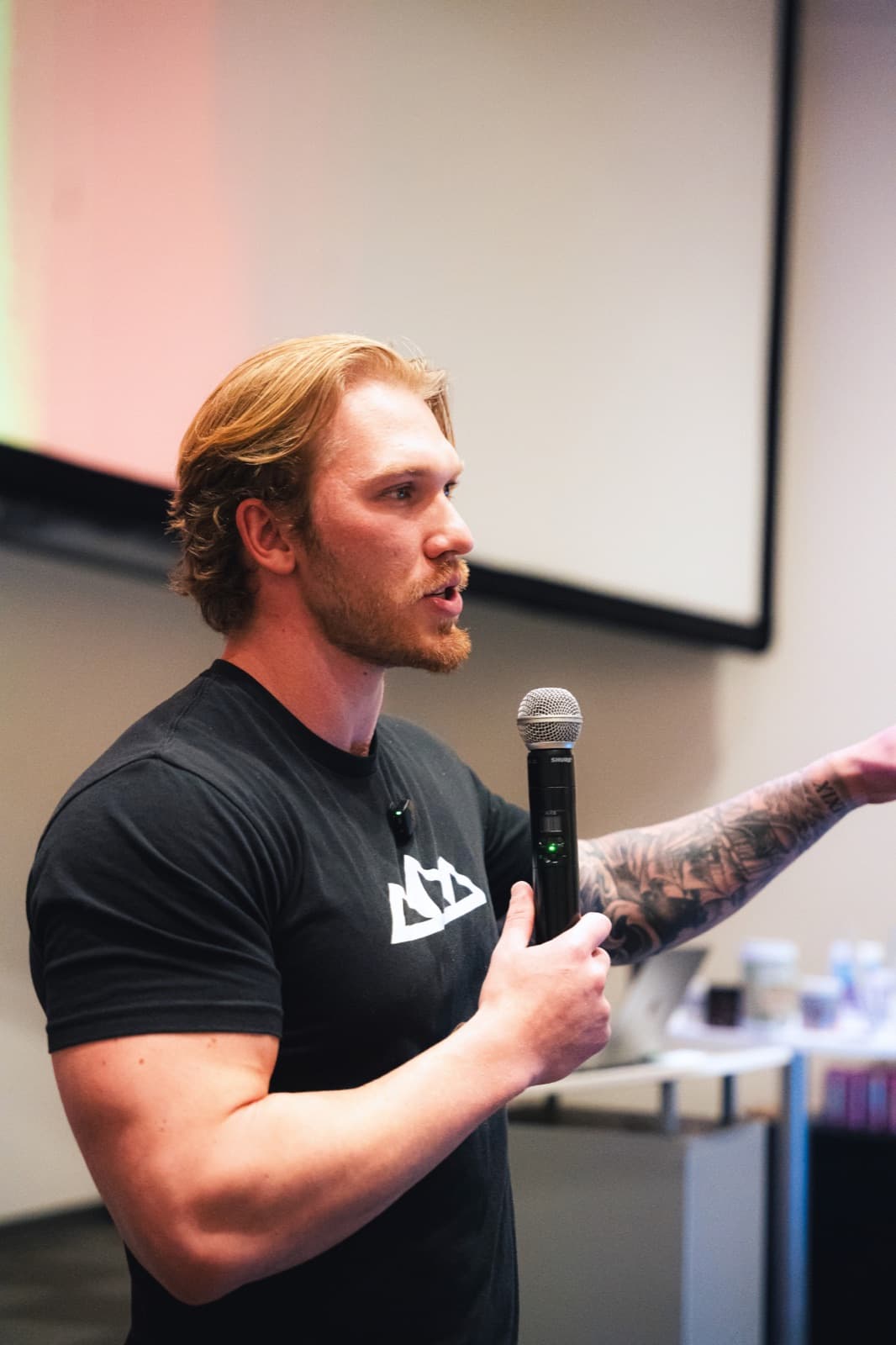
Most guides on how to get funding for a startup in Canada are directories: 200+ programs, zero advice on which one is realistic for you. This is the opposite. It's a map of every real funding source (savings, loans, grants, angels, venture capital) matched to your stage, with honest odds, real numbers, and the exact order a Kelowna or Okanagan founder should work through them in 2026.
The Funding Ladder: How to Get Funding for a Startup in Canada by Stage
Think of startup funding in Canada as a ladder. Each rung gets bigger, harder to reach, and more expensive in either interest or ownership:
- Personal savings and revenue: always available, costs you nothing but time
- Loans: Futurpreneur, BDC, CSBFP, Community Futures; costs interest, not equity
- Grants and tax credits: SR&ED, IRAP, CanExport; free money, but slow and conditional
- Friends, family, and angels: first outside equity, typically $25K-$500K
- Venture capital: for a small subset of high-growth companies
Here's the honest context most listicles skip. Canadian angel investing hit a five-year low in 2025 (CAD $113.8M across 490 deals), and a March 2026 NACO report pegged Canada's pre-seed and seed gap at roughly US$141M a year versus comparable US cities. Translation: the realistic path for most Canadian founders is savings → loans → grants → angels. Only a fraction of a percent ever climb to VC.
The good news for 2026: the Bank of Canada policy rate has held at 2.25% since October 2025 (prime is 4.45%), which makes debt genuinely cheap relative to selling 20% of your company.
Self-Funding and Revenue: The Default Most Founders Should Start With
Around 77% of founders fund their business from personal savings (Gallup). That's not a consolation prize: customer revenue is the only funding source that never dilutes you, never needs repaying, and proves your business works.
The bootstrap-vs-raise decision isn't ideological. Ask two questions:
- Is your market winner-take-all? If a competitor with $5M can lock up the market before you get there, raising makes sense.
- Is your business capital-intensive? Hardware, inventory, and manufacturing need money up front. A service business or SaaS tool often doesn't.
If the answer to both is no, self-fund as far as you can. Every dollar of revenue you generate before raising improves the terms of everything else on this list.
Startup Loans Canada: Futurpreneur, BDC, CSBFP, and Bank Financing Compared
Loans are the most underused rung on the ladder, and with prime at 4.45% they're the cheapest outside capital most founders will ever see. Here's how the big four compare:
| Program | Max amount | Who it's for | Key catch |
|---|---|---|---|
| Futurpreneur | $75K ($25K + $50K BDC co-lend) | Ages 18-39, business under 2 years old or pre-launch | 6-12 months to funding; mandatory 2-year mentorship (a feature, honestly) |
| BDC Start-up Financing | $250K | Newer businesses; up to 12-month principal postponement | Rates ~prime +2% to +6%; expects founder investment |
| BDC Small Business Loan | $350K (online) | Businesses with 24+ months of revenue | Not for true startups yet |
| CSBFP | $1.15M ($1M term + $150K line of credit) | Startups with no revenue history - projected first-year revenue counts | Delivered through your bank; personal guarantee required |
A few details worth knowing:
- The Futurpreneur loan uses a flexible adjudication model that weighs your business plan heavily: the credit-score threshold is around 600, so a thin file isn't fatal. There are streams for side hustles ($25K while keeping your day job) and newcomers to Canada.
- BDC Start-up Financing also runs an Inclusive Entrepreneurship Loan: up to $350K for businesses at least 51% women-, Indigenous-, or Black-owned, with no fees and up to 24 months of principal postponement.
- The Canada Small Business Financing Program (CSBFP) is the best answer to "can I get a startup loan with no revenue?" The government guarantees 85% of the lender's losses, so banks will lend against projected revenue. Processing runs roughly 2-6 weeks, dramatically faster than Futurpreneur.
- Kelowna-specific: Community Futures Central Okanagan lends up to $150K on 5-year terms to local businesses banks turn down (250-868-2132). WeBC, with an office in Kelowna, offers loans up to $150K plus $50K more via WEOC for businesses at least 51% women-owned.
Reality check on all of the above: startup lending in Canada almost always requires a personal guarantee and meaningful founder investment. Lenders assess your personal credit and industry experience, not your six-week-old numbered company.

Grants and Government Funding for Startups Canada: What's Actually Realistic
Grant directories love big numbers. The fine print: only about 57% of marketed "startup grants" are true grants; the rest are loans, tax credits, or wage subsidies wearing a costume. And CDAP ended in spring 2025 with no replacement, whatever the older listicles say.
What's genuinely worth your time in 2026:
- SR&ED - the biggest non-dilutive program in Canada, and it just got better. Bill C-15 (March 2026) doubled the enhanced 35% refundable credit limit from $3M to $6M in eligible expenditures (up to $2.1M refunded per year), made capital expenditures eligible again, and BC adds a permanent 10% refundable credit on top. If you're building anything technically uncertain (software, hardware, food science), read our full SR&ED tax credit guide. CRA accepts about 90% of claims as filed.
- NRC IRAP - non-repayable contributions for R&D, accessed through an assigned Industrial Technology Advisor. Its Youth Employment Program covers up to $30K per recent-grad hire, often decided in about two weeks.
- CanExport SMEs - up to $50K per foreign market at 50% cost-share for export marketing. Intake is continuous until the budget runs out, so apply early in the 2026-27 cycle.
- Women Entrepreneurship Loan Fund - microloans up to $50K.
The pro move is stacking: a CSBFP loan + SR&ED refunds + CanExport + a provincial training grant can add up to several hundred thousand dollars of combined government support for one business. For the full current list, see our guide to small business grants in Canada for 2026. One warning: grants are non-repayable only if you meet the conditions, and missed reporting can trigger clawbacks.
Friends-and-Family Rounds and Angel Investors: First Equity in Canada
When you do sell equity, the first cheques usually come from people who believe in you: friends, family, and angels. The average Canadian angel deal in 2025 was $232K.
How to run a friends and family round in Canada without poisoning the well:
- Use a SAFE or convertible note, not priced shares. It postpones the impossible job of valuing a pre-revenue company. NACO publishes free Canadian-standard Common Docs templates.
- Treat it like a real securities transaction, because it is. "Friends and family" has no legal meaning in Canada - exemptions still apply, and future investors will want your cap table clean. Document everything.
- Only take money people can afford to lose. Thanksgiving dinner is not worth $25K.
The BC edge almost every founder misses: register as a BC Eligible Business Corporation (EBC) before raising locally. Investors in a registered EBC get a 30% refundable provincial tax credit, up to $300K in credits per investor per year as of Budget 2025. A $50K angel cheque effectively costs your investor $35K. You need $25K in minimum equity to register; skipping this step is leaving your investors' 30% on the table, and sophisticated BC angels will ask.
For the Okanagan specifically, your angel targets are Valhalla Angels Kelowna (100+ members, monthly pitch forums), the OKGN Angel Summit (the 2026 finale ran June 4 in Kelowna; get on the radar for the next cohort), and VANTEC Angel Network in Vancouver, BC's main angel gateway. We've profiled all of them in our guide to angel investors in BC and the Okanagan.
Venture Capital Canada and BC: Who Funds What
Venture capital is real, but narrow. BC punched above its weight in 2024 with $2.4B, or 31% of all Canadian VC, nearly overtaking Ontario, though early 2025 cooled sharply. If you're building something genuinely venture-scale (huge market, winner-take-all, capital-hungry), the BC funds a Kelowna founder would approach first:
- Panache Ventures - Canada's pre-seed fund; first cheques up to $1.5M, Vancouver office
- Version One Ventures - Vancouver pre-seed/seed, $250K-$1.5M cheques
- Rhino Ventures - Western Canadian B2B and SaaS
- Vanedge Capital - $500M+ AUM, AI infrastructure and security
- Active Impact Investments - climate seed
Pitch mechanics for 2026: investors spend 2-4 minutes on a first-pass deck, so keep it to 10-13 slides; at seed, the team slide gets the most attention. The themes VCs are underwriting this year are capital efficiency and AI defensibility. Post-revenue? Venture debt hit a record $1.40B in Canada in 2025, a way to extend runway without another dilution event.

How Much Funding Do You Need? (And the Cost of Raising Too Much)
The question isn't "how much can I get" - it's "how much do I need to hit the next milestone, plus buffer." The 2026 norms:
- Median seed round: $2.5-3.5M at a $12-15M post-money valuation = 20-25% dilution
- Most seeds land between $1M and $4M
- Target 18-24 months of runway to your next provable milestone
- Giving up more than 25% in one early round is a red flag; raising less than 10% dilution usually means you're under-raising
The Canadian wrinkle: median Canadian seed rounds run 37-40% smaller than US peers, with valuations 20-40% lower. The flip side: lower costs and SR&ED refunds mean a $2M seed lasts 24-30 months in Canada versus 12-18 in San Francisco.
And remember the cost comparison that grant directories never make: a $100K CSBFP loan at roughly prime +3% costs you about $7,500/year in interest. Selling 20% of a company that becomes worth $5M costs you $1M. Debt is expensive when you fail; equity is expensive when you succeed. Choose accordingly.
How to Get Funding for a Startup in Canada: A Kelowna Founder's 12-Month Roadmap
Here's the order of operations for startup funding in BC, specifically the Okanagan, where 787 tech companies now generate $4.98B in economic impact:
Months 1-3: Foundations
- Join Accelerate Okanagan - start with Startup Basics, graduate to RevUP (participants have attracted $13M+ in private investment)
- Write the business plan and 12-month cash-flow projection every lender below will ask for
- Put in your own capital first - every program checks for founder skin in the game
Months 3-6: Debt stack
- Under 40? Apply to Futurpreneur now; the 6-12 month timeline means starting early
- Everyone: talk to your bank about a CSBFP loan (2-6 week processing) and BDC about Start-up Financing
- Turned down? Community Futures Central Okanagan (up to $150K) and WeBC (women-owned, up to $200K combined) exist precisely for you
Months 6-9: Non-dilutive layer
- Doing R&D? Set up SR&ED tracking from day one and talk to IRAP about an ITA
- Hiring a recent grad? IRAP's Youth Employment Program: up to $30K, ~2-week decision
Months 9-12: Equity (if you need it)
- Register as a BC EBC before approaching investors
- Pitch Valhalla Angels Kelowna, apply to the next OKGN Angel Summit, and enter the New Ventures BC Competition ($250K in prizes)
- Venture-scale? Warm-intro your way to Panache, Version One, or Rhino
- Students and researchers: entrepreneurship@UBCO and the IEI Fund are your side door
Scale-stage bonus: once you have 2+ years of operations, PacifiCan's Business Scale-up Program offers interest-free funding up to $5M; Kelowna's MAKR Group landed $2.5M in January 2026.
The unlisted step that makes every listed one easier: know people who've done it. Half the founders at our events have a Futurpreneur, Community Futures, or angel story they'll share over a drink.
Key takeaways
- Follow the ladder: savings → loans → grants/credits → angels → VC. Most Canadian businesses never need the top rungs.
- With prime at 4.45%, loans before equity: CSBFP goes up to $1.15M with no revenue history required.
- Under 40 in Kelowna? Futurpreneur ($75K) plus Community Futures ($150K) is your first $225K. Start early; Futurpreneur takes 6-12 months.
- Only ~57% of marketed "startup grants" are true grants. The ones that matter: SR&ED (now up to $6M in enhanced-rate expenditures), IRAP, and CanExport.
- Register as a BC EBC before raising: your investors get a 30% refundable tax credit, and local angels expect it.
- Typical Canadian seed: $1-4M for 20-25% dilution and 18-24 months of runway. Rounds run 37-40% smaller than the US, but the money lasts longer here.
- Raise for milestones, not vanity. Debt is expensive when you fail; equity is expensive when you succeed.
Frequently asked questions
Can I get a startup loan in Canada with no revenue?
Yes. The CSBFP has no minimum revenue requirement - banks lend against projected first-year revenue (under $10M). Futurpreneur funds pre-launch businesses, and Community Futures lends to startups banks decline. Expect a personal guarantee everywhere.
Do you have to pay back government funding in Canada?
It depends on the program. Grants like IRAP and CanExport are non-repayable if you meet the conditions (clawbacks are possible if you miss reporting). Futurpreneur, BDC, and CSBFP are loans - repayable with interest. SR&ED is a tax refund, so there's nothing to repay.
What credit score do I need for a Futurpreneur loan?
The rough threshold is 600, but Futurpreneur's flexible adjudication model weighs your business plan heavily, so an imperfect score isn't automatically disqualifying. Budget 6-12 months from first contact to money in the bank.
How much should I raise for a seed round in Canada?
Most Canadian seed rounds land between $1M and $4M, with the median around $2.5-3.5M for 20-25% dilution. Raise enough for 18-24 months of runway to your next milestone. Canadian rounds run 37-40% smaller than US equivalents, but lower costs mean the money stretches further.
What's the best startup funding option in Kelowna specifically?
Start with Accelerate Okanagan for programming and connections, then stack Community Futures Central Okanagan (up to $150K), Futurpreneur if you're under 40, and a CSBFP loan through your bank. For equity, register as a BC EBC and pitch Valhalla Angels Kelowna or enter the OKGN Angel Summit.
Is the CDAP grant still available in 2026?
No. The Canada Digital Adoption Program ended in spring 2025 with no replacement, though many directories still list it. For digital and R&D spending, SR&ED and IRAP are the current non-dilutive options.
How do I find investors for a small business in Canada?
Start local: angel groups (Valhalla Angels in Kelowna, VANTEC in Vancouver), pitch competitions (OKGN Angel Summit, New Ventures BC), and your accelerator's network. Most angels invest in founders they've met more than once - show up before you need money.
Funding a business in Canada is less about finding a secret program and more about working the ladder in the right order. The fastest founders are the ones who can ask someone two rungs ahead. Join the Kelowna Founders Club free and you'll be in the room with people who've closed Futurpreneur loans, SR&ED refunds, and angel rounds - and will tell you exactly how.
Want the next play first?
Join free and get every guide, speaker insight, and event invite before anyone else. Built by founders in the Okanagan.
Join the club freeSee upcoming events