

Personal Branding for Founders: Build an Audience That Pays
A practical guide to personal branding for founders in 2026: positioning, platforms, a founder content system, and a 30-day plan - with a Kelowna edge.
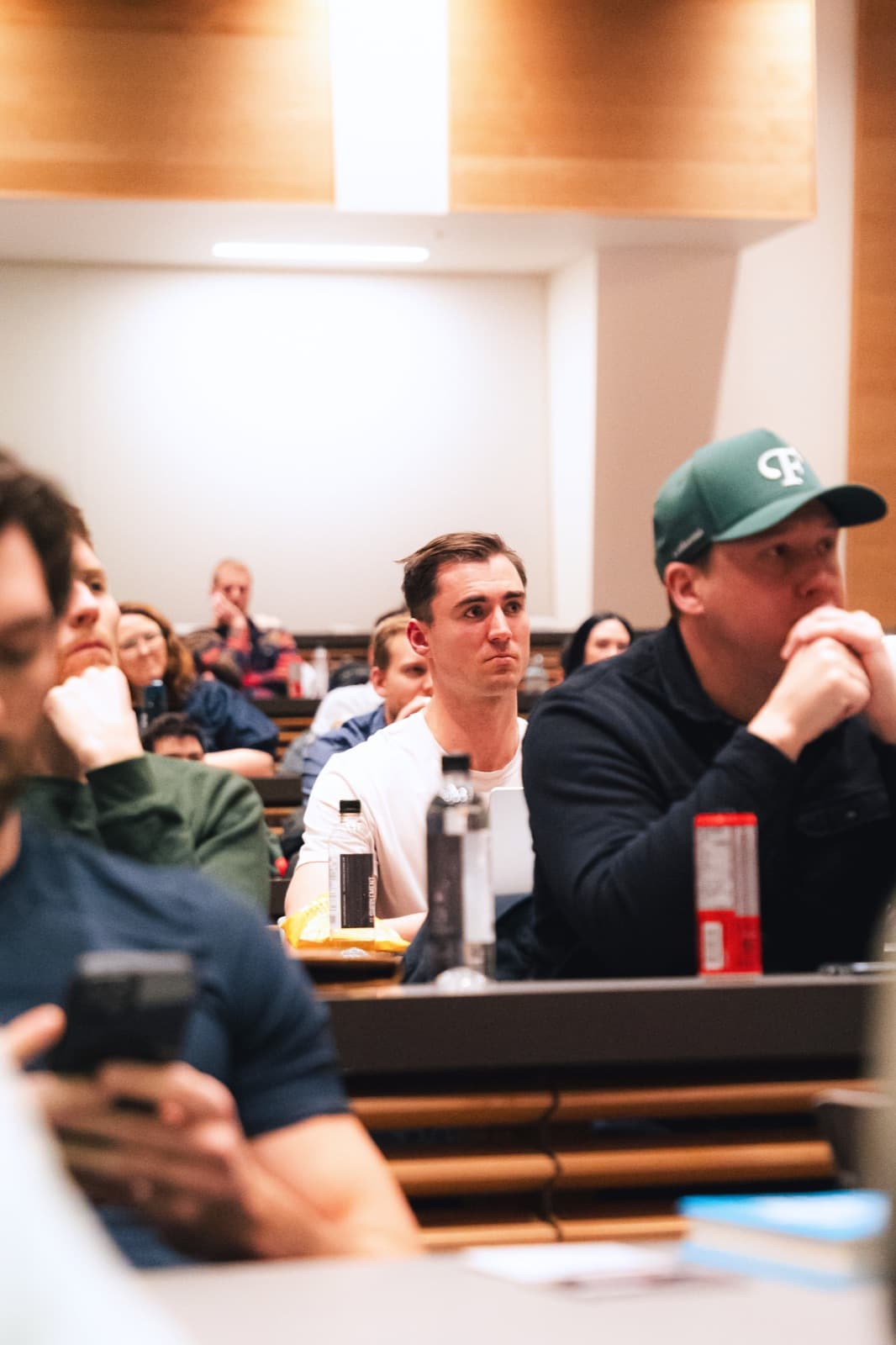
Nobody trusts a logo. People trust people - and in 2026 that gap is the whole game. Personal branding for founders isn't vanity; it's the cheapest distribution channel you'll ever own, and if you're building in Kelowna or anywhere in the Okanagan, you have an unfair advantage most founders in Toronto or Vancouver would kill for: a market small enough to actually win. This is the practical playbook - positioning, platform, content, conversion, and a 30-day plan you can start Monday.
Why personal branding for founders beats the company logo
The trust math has flipped. The 2026 Edelman Trust Barometer puts trust in business at 64% versus 53% for government - and 75% of people say CEOs are obligated to help bridge trust divides, while only 44% believe they do it well. Translation: trust has migrated from institutions to individuals, and the individual your customers want to hear from is you, not your company page.
The numbers behind founder-led content back this up:
- Industry benchmarks attribute roughly 44-49% of a company's market value to the CEO's reputation - the founder's name is a balance-sheet asset, not a soft skill.
- Founder and executive posts outperform company-page posts by roughly 8x on engagement. Same message, different messenger, radically different reach.
- 82% of people trust a company more when its executives are active on social media, and 77% are more likely to buy when the CEO shows up publicly.
- On pipeline, founder-led content outperforms brand content by about 3x on LinkedIn, with first inbound DMs in 3-6 weeks and measurable pipeline in 9-12 weeks, per the StartupCookie founder-led content playbook.
This is the honest answer to the personal brand vs company brand debate - and to why founders need a personal brand at all: build both, but the founder profile is the engine and the company page is the trailer. Your face pulls; the logo confirms.
Positioning: the one thing you want to be known for
The 2026 consensus from every serious operator is the same: the strongest founder brands are the most consistent and the most specific - not the most polished. Nobody remembers "entrepreneur passionate about innovation." Everybody remembers the person who owns one idea.
Look at the personal branding examples that actually worked:
- Naval Ravikant - one theme, hammered for a decade: wealth and leverage.
- Pieter Levels - build-in-public radical transparency ("12 startups in 12 months").
- Codie Sanchez - one contrarian niche: boring cash-flow businesses.
- Justin Welsh - solopreneur systems, ever since leaving his SaaS exec role in 2019.
None of them are famous for being well-rounded. They're famous for being findable on one shelf.
Your positioning exercise, in three steps:
- Intersect three circles: what you know deeply (your craft), what you're building (your market), and what you'll still care about in five years. Your topic lives in the overlap.
- Write your one-liner: "I help [specific person] get [specific outcome], and I'm documenting how." If a stranger at a Kelowna coffee shop can't repeat it back, tighten it.
- Add founder-market fit: why are you the right person to build this? Investors now cite this narrative as a deciding factor on term sheets. Your history is your moat - use it.
This is the core of founder brand strategy: pick the shelf before you make the products.
Choosing your platform: LinkedIn, short-form video, or newsletter
The biggest mistake in building an audience as a founder is being mediocre everywhere. Pick one discovery platform, add email capture from day one, and ignore the rest for 90 days.
| Platform | Best for | The 2026 case | Watch out for |
|---|---|---|---|
| B2B, services, consulting | 1.2B+ members, under 2% post regularly - a genuine arbitrage. ~80% of B2B leads flow through it. | Slower for consumer brands | |
| Short-form video | Consumer, local visibility | 85% of marketers rank it the most effective format; Reels reach rates around 30% | Production time; TikTok regulatory uncertainty in Canada |
| Newsletter | Ownership and depth | Email is the "own your audience" play - the 2026 creator-economy thesis is ownership over attention. Typical 2-5% free-to-paid conversion if you ever monetize. | No discovery - it grows from another channel |
For most Okanagan founders - B2B, trades, professional services, agencies - LinkedIn personal branding is the default answer. Tools are cheap or free at this stage: Kit is free to 10,000 subscribers and beehiiv is free to 2,500, so there's no excuse for skipping email capture.
The sequencing that works: LinkedIn (or video) for discovery → a simple lead magnet → newsletter for the relationship. If video is your discovery lane, our guide to short-form video marketing for small business covers the mechanics.
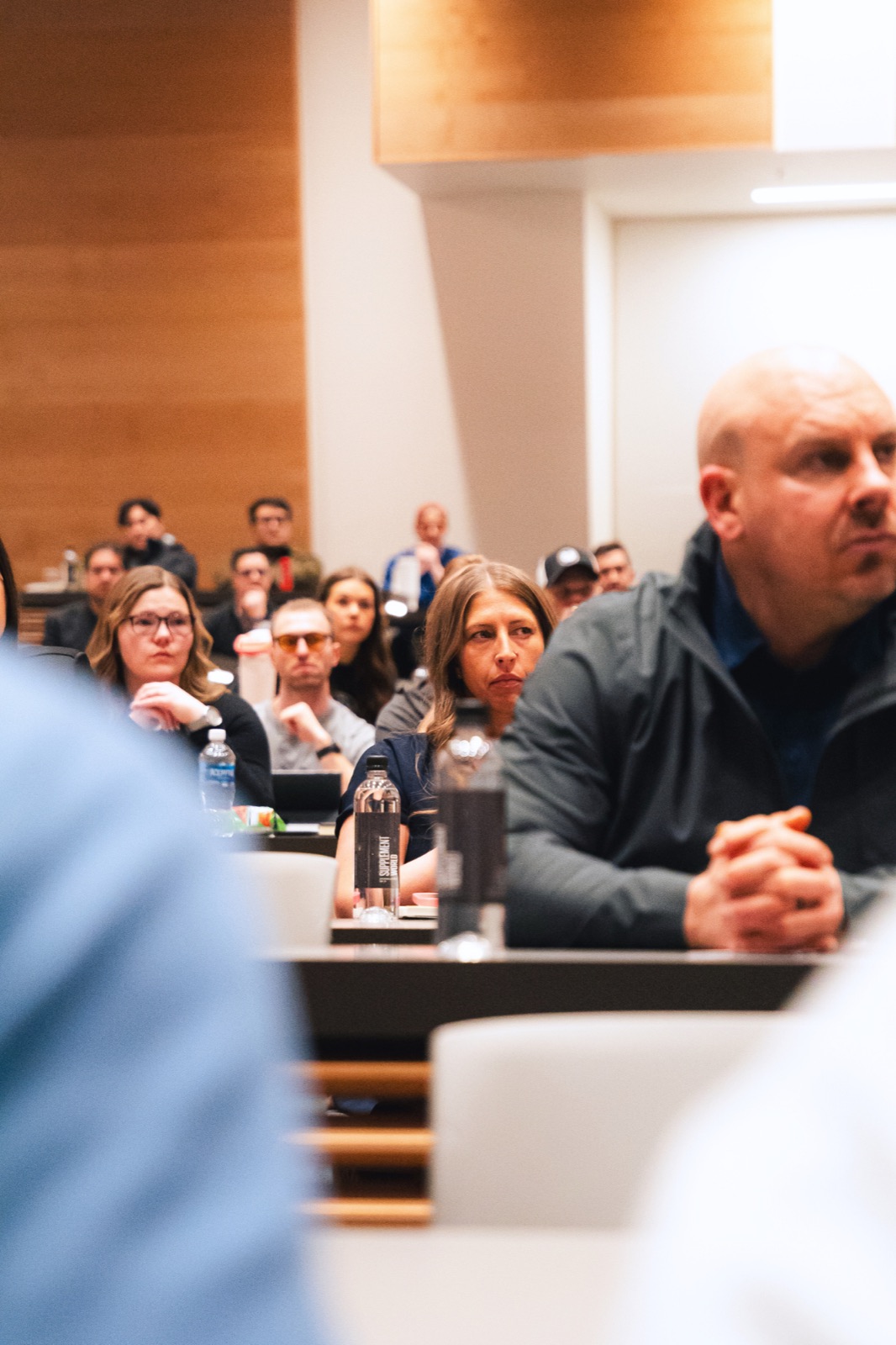
The founder content matrix: stories, lessons, opinions, proof
Here's a founder content strategy you can run without a marketing team. Every post you publish falls into one of four quadrants:
- Stories - the month you almost missed payroll, the customer who changed your roadmap, why you left your job. Text-based story posts remain elite for connection on LinkedIn.
- Lessons - tactical, stealable frameworks from your actual work. Document/carousel posts hit around 6.6% engagement (sweet spot: 8-15 slides).
- Opinions - where you disagree with your industry's conventional wisdom. This is what makes you a name instead of a feed-filler; it's the raw material of thought leadership for founders.
- Proof - case studies, numbers, screenshots, client wins. B2B buyers consume roughly 13.4 pieces of content before contacting sales, and 67% of the journey is self-directed. Proof posts are your silent salespeople.
Rotate the quadrants so you never become one-note. On mechanics, the 2026 LinkedIn algorithm rewards depth over applause: dwell time beats reactions (a post read for 30 seconds outperforms 50 quick likes), saves are worth roughly 5x a like, and vertical 30-90 second video gets about 80% more reach while horizontal video is penalized. The March 2026 "Authenticity Update" cracked down on engagement pods, engagement bait, and link spam - and polls are dead at 0.07% engagement. Don't game the feed; feed it substance.
Cadence: 3-4 quality posts per week. Buffer's study of over 2 million posts found accounts posting 3+ times weekly for 90 consecutive days see 2-4x more profile views and connection requests - and a steady 3-a-week beats bursts of 10 followed by silence. Tuesday to Thursday are your best windows.
Writing in your own voice (with AI as editor, not ghostwriter)
Here's the stat that should reframe how every founder uses AI: an Originality.ai study of 99 influential LinkedIn profiles (January 2026) found 53.7% of long-form LinkedIn posts are "likely AI" - yet human-written content outperforms AI-flagged content by 25-80% on engagement in trust-driven sectors. Research also suggests that content readers merely believe is AI-generated cuts trust by about half.
The takeaway is not "avoid AI" - 89% of small businesses already use it for content. The takeaway is division of labour:
- You supply what AI can't invent: your stories, your real numbers, your losses, your contrarian takes, the thing a client said to you on Tuesday.
- AI edits: tightens structure, cuts filler, suggests hooks, fixes rhythm.
- You do the final pass out loud. If a sentence doesn't sound like something you'd say at a KFC event over coffee, rewrite it or cut it.
A useful test: could a competitor have written this post? If yes, it's generic. The specifics - names, dollar figures, dates, mistakes - are what make it yours. LinkedIn's 2026 guidance is tightening authenticity expectations for AI-assisted content, and Google is suppressing formulaic AI posts, so the incentives and the ethics now point the same way.
Local fame first: winning Kelowna before the internet
This is the section no national guide will give you, and it's the biggest lever available to anyone doing personal branding in Kelowna.
The math: Kelowna is about 172,000 people and the fastest-growing city in BC, with roughly 37,000 businesses in the Central Okanagan - 73.5% of them solo operators. The pool you need to reach to become the known name in your niche is measured in hundreds, not millions. In Vancouver you're a rounding error; in Kelowna, 90 days of showing up makes you a recognized face at every business event in town.
How to run the local-fame play:
- Show up weekly. One local event per week, minimum. Browse what's coming up at KFC, plus Kelowna Chamber events (Commerce ConneX, After 5) and EO Kelowna if you qualify.
- Graduate from attendee to speaker. Speaking is the single fastest brand accelerant. KFC's New Year 2026 Kickoff put local founders like Sam Gaudet, Alex McFadyen, and Chris Rigoudis on stage in front of the exact rooms they sell into. Pitch a 15-minute tactical talk on your one thing.
- Turn every room into content. One event = one story post, one lesson post, one photo. Your local presence feeds your online presence, and vice versa.
- Get named and cited locally. 45% of people now use AI tools for local business recommendations (BrightLocal). A founder who's repeatedly mentioned on local sites, event pages, and directories becomes the entity AI recommends. Pair this with our guides on local SEO for Kelowna small businesses and optimizing your Google Business Profile - your personal brand and your local search presence compound each other.
Milestones like the Okanagan Angel Summit (its June 2026 finale saw $200K+ invested) show what local visibility converts into: when cheques get written in a small market, they go to known names.
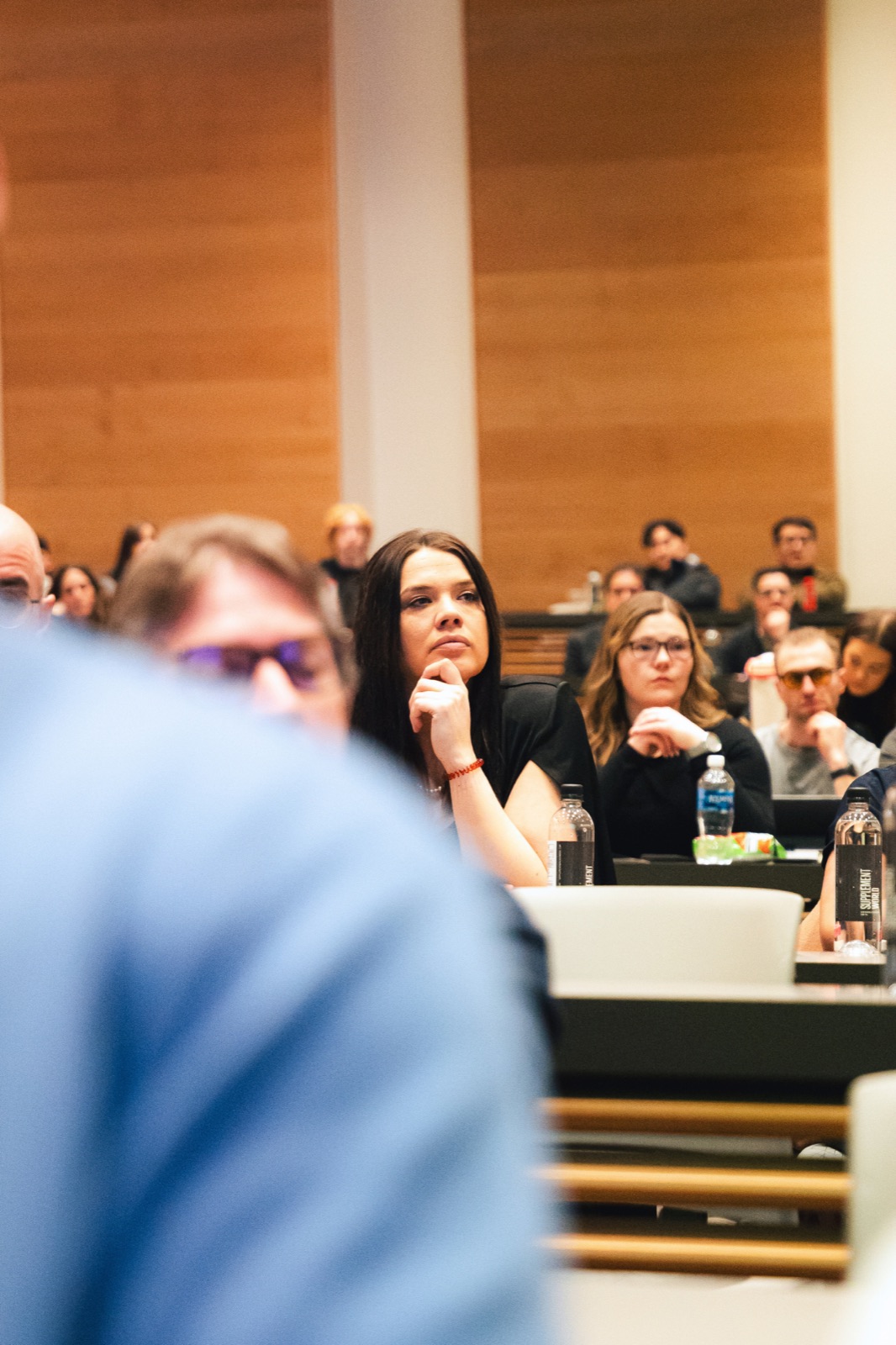
Turning attention into leads without being cringe
An audience that doesn't pay is a hobby. But the conversion play is softer - and far more effective - than most founders fear. Inbound from content converts around 14.6% versus 1.7% for cold outbound, and 79% of B2B decision-makers ignore cold DMs entirely. Content marketing has long benchmarked at roughly 3x more leads than outbound at 62% lower cost per lead. You don't need to pitch hard; you need to be findable and responsive.
The non-cringe conversion stack:
- Reply to every comment. Comments are warm leads raising their hands in public.
- Move fast on inbound. Responding within the first hour converts about 53% versus 17% after 24 hours. Set a notification and treat DMs like a ringing phone.
- Use a soft CTA. "I wrote up the full checklist - want it?" beats "Book a call." In a zero-click world, capture the email; don't chase site traffic.
- Let proof posts sell. Your case studies do the pitching so your DMs don't have to.
- One direct ask per month, maximum. Earn it with the other eleven posts.
The 30-day kickstart: personal branding for founders on a schedule
Here's the kickstart. It assumes zero existing audience and about 4-5 hours per week - realistic personal branding tips for business owners who still have a business to run.
Week 1 - Position and set up
- Write your one-liner and your three content pillars (subtopics of your one thing).
- Rewrite your LinkedIn headline and About section around the one-liner. Real photo, no logo avatar.
- Draft your first 3 posts: one story, one lesson, one proof.
- Attend one local event. If you're in the Okanagan, join the Kelowna Founders Club - it's free, and it's the fastest room in town.
Week 2 - Publish and capture
- Post 3x (Tue-Thu). Reply to every comment same-day.
- Set up email capture (Kit or beehiiv, both free at your size) with a simple one-page lead magnet.
- Comment thoughtfully on 5 posts a day from people your customers already follow.
Week 3 - Add opinion and proof
- Post 3x, including your first genuinely contrarian opinion post.
- Turn last week's event into a story post. Photos help.
- DM (don't pitch) 5 people who engaged twice: "Noticed you've been reading - what are you working on?"
Week 4 - Compound
- Post 3x. Try one document/carousel (8-15 slides) or one vertical video under 90 seconds.
- Pitch one local speaking slot or podcast appearance.
- Review the numbers: profile views, followers, inbound DMs, email subscribers. Those are your KPIs - not likes.
That's 12 posts, 4 events, an email list, and a speaking pitch in 30 days. Set expectations honestly: early indicators typically show within ~90 days, revenue impact around six months, and the Buffer data says 90 consecutive days is the real threshold - treat day 30 as a lap marker, not the finish line. That's how to build a personal brand in 2026: unglamorous reps, compounding quietly.
Key takeaways
- Trust has shifted from institutions to individuals - founder posts pull roughly 8x the engagement of company pages, so the personal brand is the engine and the company brand is the trailer.
- Positioning wins on specificity and consistency, not polish. Pick one thing and repeat it for a year.
- Choose ONE discovery platform (LinkedIn for most B2B founders) and add email capture from day one - ownership beats attention.
- Run the content matrix - stories, lessons, opinions, proof - at 3-4 posts per week; 90 consecutive days is the compounding threshold.
- Use AI as your editor, never your ghostwriter: human-sounding content outperforms AI-flagged content by 25-80% where trust matters.
- Kelowna's small market is a cheat code: weekly local events plus consistent posting makes you the known name in your niche in months, not years.
- Convert without cringe: reply to everything, answer inbound within the hour, soft CTAs only.
Frequently asked questions
How long does it take to build a personal brand?
Expect first signals - inbound DMs, connection requests, speaking invites - within about 90 days of consistent posting, and measurable revenue impact around 3-6 months. The founders who fail are almost always the ones who quit at week six.
How often should founders post on LinkedIn?
Three to four quality posts per week. Buffer's 2M+ post study found accounts posting 3+ times weekly for 90 consecutive days earn 2-4x more profile views and connection requests - and steady consistency beats bursts of ten posts followed by silence.
Should I build my personal brand or my company brand first?
Both, with a clear relationship between them - but lead with the personal profile, since founder posts earn roughly 8x the engagement of company pages. Your face generates the attention; your company page and website convert and confirm it.
Can I use AI to write my LinkedIn posts?
Use it as an editor, not a ghostwriter. Over half of long-form LinkedIn posts are already "likely AI," yet human-written content outperforms AI-flagged content by 25-80% on engagement in trust-driven sectors. Supply your own stories and numbers, let AI tighten them, then do a final pass in your own voice.
Does personal branding work in a small city like Kelowna?
It works better. With roughly 172,000 people and 37,000 Central Okanagan businesses, the pool you need to reach to become the known name in your niche is tiny - and 45% of people now use AI tools for local recommendations, which favours the founder who keeps getting named locally.
What should I post about as a founder?
Rotate four quadrants: stories from your journey, tactical lessons from your work, opinions where you disagree with industry convention, and proof (case studies, numbers, wins). B2B buyers consume ~13.4 pieces of content before contacting sales, so every post is pre-selling for you.
How do I get leads from my personal brand without being salesy?
Reply to every comment, respond to inbound within the hour (53% conversion versus 17% after 24 hours), and use soft CTAs like a free checklist instead of "book a call." Cap direct asks at about one per month and let your proof posts do the pitching.
The fastest way to start is in a room, not on an app. Come meet the founders, speakers, and operators already building their names in the Okanagan - join the Kelowna Founders Club free and make this month the one where people start knowing yours.
Want the next play first?
Join free and get every guide, speaker insight, and event invite before anyone else. Built by founders in the Okanagan.
Join the club freeSee upcoming events