

Community-Led Growth: Build a Scene, Not Just a Brand
Community-led growth turns customers into a scene that sells for you. A practical playbook from your first ten members to monetizing, proven in Kelowna.
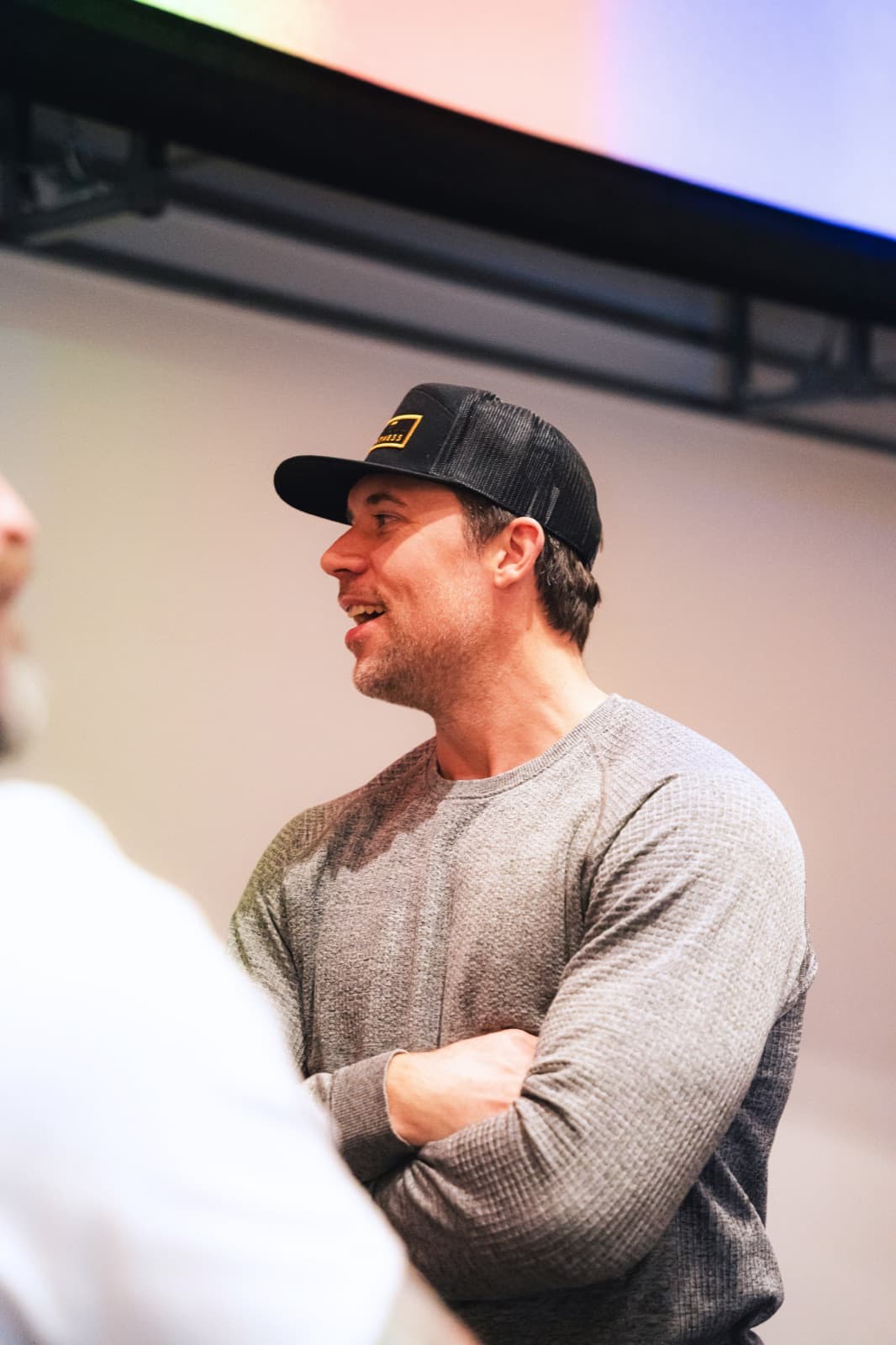
Every founder wants a brand people love. Almost nobody builds the thing that actually creates that love: a scene. Community-led growth is the strategy of letting your members, customers, and fans drive acquisition, retention, and product feedback for you - and in 2026, it's quietly outperforming ad budgets ten times its size. This guide is the full playbook, using a free founder community in Kelowna, BC as the living proof.
What community-led growth actually is (and isn't)
The definition the industry has settled on: community-led growth (CLG) is a go-to-market strategy where your users, customers, and advocates collectively drive acquisition, retention, and product feedback - instead of your marketing team doing all of it alone. Common Room's guide to community-led growth is the canonical B2B reference if you want the SaaS-flavoured version.
Here's what it is not:
- Not a Facebook group you post links into. That's a distribution channel wearing a community costume.
- Not a paywall. Slapping a fee on an audience isn't a strategy - on its own, it kills more communities than it grows.
- Not a replacement for your other channels. The best 2026 practice pairs community-led growth with product-led or content-led growth. Community amplifies a business that already works.
One dose of honesty up front: expect 12-18 months before community-led growth shows meaningful ROI. If you need revenue next quarter, run founder-led sales alongside it. Community is a compounding asset, not a campaign.
Audience vs community: the difference that changes everything
This is the distinction most "community marketing for small business" advice glosses over, and it changes everything you build.
You talk to an audience. A community talks to each other. An audience is one-way broadcast: you post, they consume. A community is multi-directional: members form relationships with each other, not just with you. Bettermode's breakdown of audience vs community frames it well - audience building optimizes your reach; community building optimizes members reaching their goals.
Three practical consequences:
- Value keeps flowing when you stop posting. An audience goes quiet when you do. A community keeps meeting, referring, and helping without you.
- You own the space. Your Instagram following belongs to Meta's algorithm. A community space - a venue, a directory, an email list - is yours, data and all.
- Small beats large. A 50-person community where members genuinely help each other drives more business value than 50,000 passive followers. Depth compounds; reach decays.
The question for your next 100 hours: do you want more people watching you, or more people invested in each other under your banner?
The business case: why community-led growth works
Numbers first, because "community" sounds soft until you see what it does to retention and referrals.
- In the CMX 2025 industry report, only 24% of community teams could quantify their business impact - but of those who could, nearly half reported $1M+ in attributable value. Measurement is the bottleneck, not results.
- Industry research suggests companies with active communities see roughly 2.1x revenue growth, 46% higher customer lifetime value, and 26% higher retention.
- Bain's classic finding still holds: a 5% improvement in retention lifts profit by 25-95%. Community is a retention machine.
- 92% of people trust recommendations from friends over any advertising, and Wharton research found referred customers spend about 16% more and carry 59% higher lifetime value. A community is a referral engine that never invoices you.
- Research also suggests community members spend around 19% more than non-member customers.
And the classic brand community examples show this isn't theory:
- Harley Owners Group - over 1M members since 1983; members outspend non-members on merchandise and parts and upgrade bikes more often.
- Sephora Beauty Insider - 5M+ members and 2.7M+ posts, with niche groups like "Acne-Prone Skin" where customers sell each other on products Sephora stocks.
- Notion - a 280K+ member subreddit (roughly 10x Figma's) and a waitlisted ambassador program; community is credited with driving most of its organic traffic.
- Duolingo - community-shaped courses helped it pass 80M monthly active users by 2025.
- HubSpot - free certifications create practitioners trained on its methodology who advocate for the platform inside their companies.
The pattern: community members don't just buy more - they recruit, retain, and improve the product for you. That's the thesis of community building for startups.
Choosing your format: events, online groups, or both
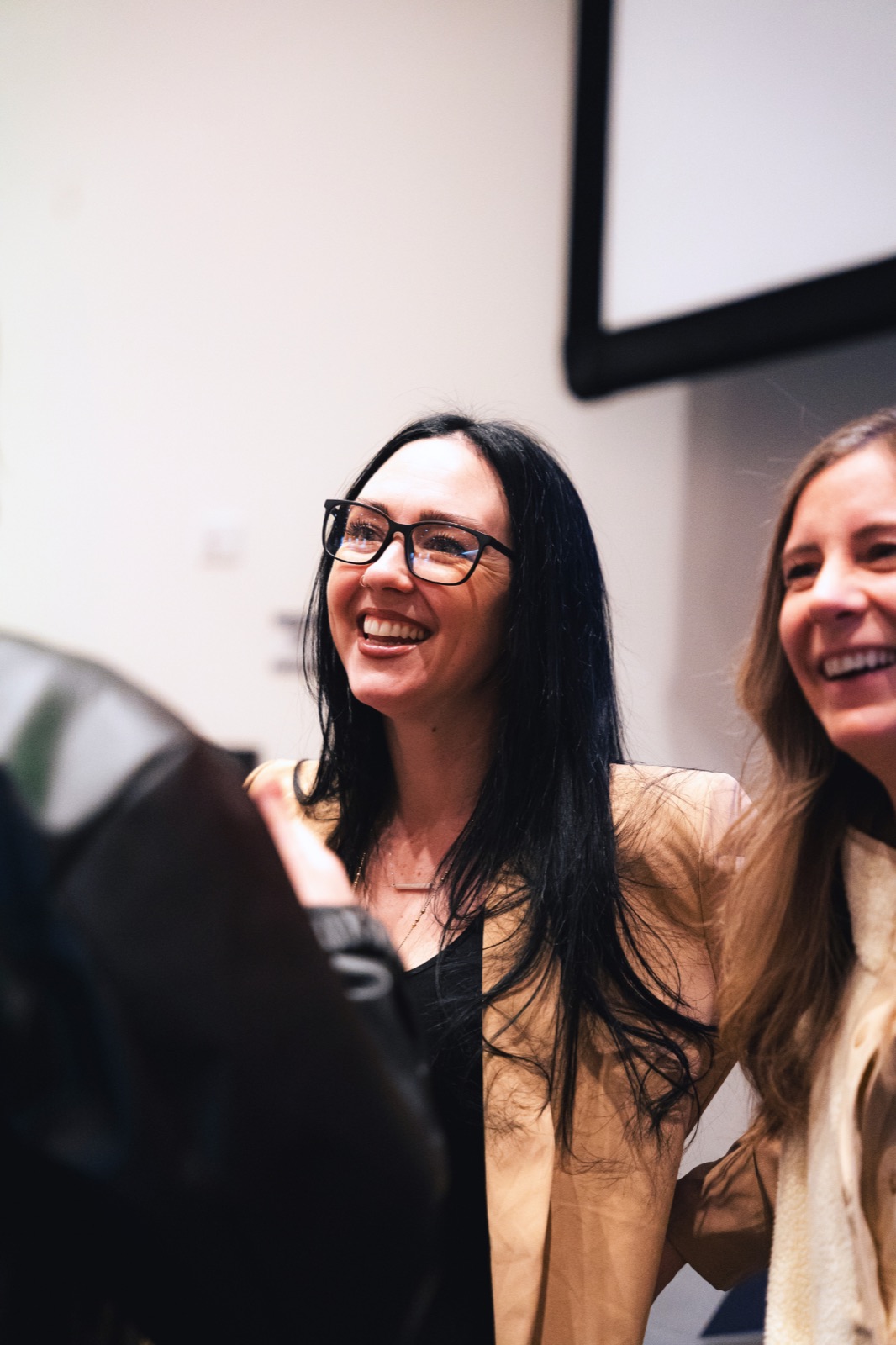
Most CLG content assumes you'll build a Slack group. For a local business or a founder community, in-person is having a massive moment:
- 78% of event organizers call in-person events their most impactful marketing channel, and 97.4% rate them very or moderately important for 2026 - per Bizzabo's event marketing statistics.
- 54% of attendees plan to attend more in-person events than last year.
- 95% of professionals say face-to-face is essential for lasting business relationships, and 40%+ of in-person B2B meetings convert to customers.
- Worried you're too small? 45% of event teams are 1-3 people. One determined founder can run this. (Event costs are rising 5-14% in 2026 across venues, food, and AV - lock venues early.)
Here's the honest comparison for how to start a business community:
| Format | Cost to start | Best for | Watch out for |
|---|---|---|---|
| In-person events | Venue + time (often free via sponsors) | Local businesses, deep trust, Kelowna-scale markets | Doesn't scale beyond your region |
| Discord / Slack group | Free | Testing demand before investing | Ghost towns; platform noise |
| Skool | $9-$99/mo | Paid memberships, courses + community | Less customizable |
| Circle | $89-$419/mo (+0.5-2% transaction fees) | Polished branded community at scale | Overkill before ~100 members |
| Hybrid (events + online) | Combined | Momentum between meetups | Doubles your programming workload |
The pragmatic 2026 community growth strategy: start free (Discord or a simple email list), anchor everything to a recurring in-person event, and only pay for a platform once people are already talking to each other. If you're in the Okanagan, come see the format live at a KFC event before you build your own.
Starting from zero: your first ten members
This is the section the big guides skip, and it's where most communities die. Your first ten members set the tone and quality bar for everyone who comes after. People who feel chosen show up, stick around, and advocate differently than people who clicked a link.
The sequence that works:
- List 20-30 warm people, not strangers. The ones who reply to your emails, comment thoughtfully, or got results working with you. Founding members are recruited one at a time, by name.
- Run 10 research calls (30 minutes each). Ask what they're struggling with and what they'd want from a community. First Round Review's guide to your first 1,000 community members treats this as the validation step - because it is.
- Share the themes back, then invite them as founding members. "Ten of you said the same thing - I'm starting something about it, and I want you in first" converts far better than a public launch.
- Seed activity 1-2 weeks before opening the doors. Have founders posting, asking questions, and welcoming people so member #11 walks into a warm room, not an empty one.
- Grow deliberately: aim to double every two weeks. 10 → 20 → 40 → 80 → 160. Fast enough for momentum, slow enough to keep culture intact.
Two calibration numbers from Fabian Pfortmüller's work on critical mass in communities: a community can feel alive with as few as ~5 people who already know each other, while online communities of strangers may need 100-200. And expect only 10-30% of even a highly engaged group to show up to any given event - invite accordingly.
Finally, David Spinks' rule from Lenny's Newsletter: define who your community is NOT for from day one. Exclusion isn't elitism; it's what makes the room worth being in.
Programming that keeps people coming back
Getting people in the door is marketing. Getting them back is community. Retention is built through repeatable rituals, not sporadic big events. A member with a monthly meetup on the calendar and people replying to their questions does not drift away.
Your programming toolkit:
- One anchor ritual. A monthly event, same rhythm, so "are you going?" becomes a sentence people say to each other.
- Varied speakers. KFC's past lineup - a mortgage broker, a content creator with 8.8M followers, a sales copywriter, a fitness-business coach - rotates across money, marketing, sales, and mindset so every event serves a different slice of members.
- Peer-support loops. Member intros, "who can help with X?" threads, a directory. The product is members helping members.
- Onboarding that creates a first win fast. A new member who gets a useful connection in week one is a member for a year.
- A code of conduct, enforced. Culture is what you tolerate.
- KPIs beyond attendance: repeat-attendance rate, member-to-member connections, referrals generated.
Benchmarks: median membership renewal sits around 85%, and under 5% monthly churn is excellent for recurring memberships. If people ghost after one visit, fix programming before spending another dollar on promotion. (Networking well at events is its own skill - here's how to network as an entrepreneur without being that person.)
Monetizing without killing the vibe
Yes, you can make money from a free community - but sequence matters, and greed shows.
The 2026 reality check: only 18% of creators earn sponsorship revenue at all, and the IAB's 2026 Creator Economy Report found median sponsorship rates rose 18% year-over-year while available sponsorship inventory shrank 12% as brands consolidated spend. Translation: sponsors exist, but they back communities with real engagement, not follower counts.
The models that work, in the order to try them:
- Sponsorships. Local businesses pay to be in front of a room full of their exact customers. Rule: only take sponsors your members genuinely care about, and always disclose. A protein brand sponsoring a founder event where half the room lifts? Great. A random cheque from anyone? That burns trust you can't buy back.
- Events. Keep the core gathering free; charge for premium formats - workshops, dinners, retreats.
- Tiers. The proven pattern: free community as top-of-funnel → paid tier with gated value → premium access or cohorts. Never paywall what was free; add new value behind the paywall.
- Your own business. The quietest model: the community makes you the most connected person in your market, and deal flow follows. Just make sure your offer is priced properly before you pitch a warm room.
The meta-rule: combine one recurring revenue stream with one or two one-time streams, and let the model fit the community you actually built - not the one a monetization course imagined.
Case study: how Kelowna Founders Club grew a scene from scratch
Time to show receipts. The Kelowna Founders Club (KFC) is a free community for curious, ambitious people building careers, companies, and ideas in Kelowna - students, founders, creatives, and operators alike - and a live example of every principle above.
The market context: the Central Okanagan has over 17,000 licensed businesses and a tech sector of 787 companies generating $4.98B in economic impact. There were paid networks and accelerator programs - Kelowna Chamber groups, Accelerate Okanagan - but no free, founder-first scene where a student and a nine-figure operator could land in the same conversation.
What KFC did, mapped to this playbook:
- Format: anchor in-person events, free to attend - betting on the face-to-face resurgence rather than another Slack group.
- First members: warm, hand-picked people set the tone; word-of-mouth grew the room from there.
- Programming: rotating speakers across money, content, sales, and coaching, so each event pulls a different crowd back into the same community.
- Monetization without vibe-death: the community stays free; local sponsors who genuinely fit the audience support the events - and have publicly celebrated the partnership, which is what aligned sponsorship looks like.
- The signal it's working: people have flown in from across the country just to be in the room at a KFC event. Nobody flies for a brand. People fly for a scene.
That's community building in Kelowna as a growth engine - for the organizers, for the sponsors, and mostly for the members who find co-founders, customers, and friends in the room.
Key takeaways
- Community-led growth = your members drive acquisition, retention, and feedback. A group chat or a paywall alone doesn't qualify.
- Audience vs community: you talk to an audience; a community talks to each other. Build the second.
- The economics are real: referred customers have ~59% higher lifetime value, community customers spend more, and a 5% retention lift can raise profit 25-95%.
- In-person is the 2026 edge - 78% of organizers call live events their most impactful channel, and one person can run them.
- Your first ten members matter more than your first hundred. Recruit them by name after research calls, then double every two weeks.
- Retention comes from repeatable rituals, varied programming, and member-to-member value - aim for ~85% renewal.
- Monetize in this order: aligned sponsors → premium events → tiers. Never paywall what was free.
Frequently asked questions
What's the difference between an audience and a community?
An audience is one-way: you broadcast, they consume, and the platform owns the relationship. A community is multi-directional: members build relationships with each other and keep creating value when you're offline - and you own the space and the data.
How many members do you need for a successful community?
Fewer than you think. Critical-mass research suggests as few as ~5 people can sustain a community if they already know each other, while online communities of strangers may need 100-200. Your first ten hand-picked members matter most because they set the culture.
How long does community-led growth take to pay off?
Plan for 12-18 months to meaningful ROI. In the CMX 2025 report only 24% of community teams could quantify their impact - but nearly half of those reported over $1M in attributable value. It compounds slowly, then suddenly.
Can you make money from a free community?
Yes - through aligned sponsorships, paid premium events, tiered memberships, and the deal flow that comes from being the most connected operator in your market. Add paid value on top of the free core; never paywall what members already had.
Should I start with in-person events or an online group?
Test demand free online, but anchor the community in a recurring in-person event if your market is local - 95% of professionals say face-to-face is essential for lasting business relationships. Hybrid works once you have momentum, but it doubles your programming load.
Does community-led growth work for small local businesses, not just startups?
Arguably better. A local business's customers share a geography, which makes gathering them easy and referrals immediate - the Harley Owners Group model at Main Street scale. Community marketing for small business is mostly showing up consistently where your customers already want to connect.
Is there a free business community in Kelowna?
Yes - the Kelowna Founders Club runs free events for founders, operators, students, and creatives across Kelowna and the Okanagan, with speakers ranging from mortgage brokers to creators with millions of followers. Membership is free.
Building a scene beats renting an audience - and the fastest way to learn community-led growth is to stand inside one that works. If you're near Kelowna, West Kelowna, Vernon, or Penticton, join the Kelowna Founders Club free and see what a room full of ambitious people can do for your business.
Want the next play first?
Join free and get every guide, speaker insight, and event invite before anyone else. Built by founders in the Okanagan.
Join the club freeSee upcoming events